
C For Cookie
One of my students mentioned this video in class not too long ago, but every time I tried to watch it You Tube was down.
This morning, I finally got to see it.
10.26.2006

10.24.2006
Unfinished Stories Project
A snippet of my old, yet very unfinished story "A War to Fight" is up over at Kevsville.
For those of you who don't know about the Unfinished Stories Project, here's Mr. O'Cuinn's take on what he's up to:
Sometimes stories remain unfinished. Sometimes stories just die, in the middle of a plot, or the start of a sentence, or even at the end of a wor-
Sometimes the writer, having moved on, will come back and try to revive the story. And sometimes that works. But sometimes not. A whole lotta sometimes. People need endings, conclusions without contradictions, closure. But we don't always get them.
My story is #35, which means Kevin's already posted a number of cool little unfinished stories by some very talented writers--including Elizabeth Ellen, Myfanwy Collins, and Daniel Alarcon (whose War by Candlelight you should all check out), just to name a few--but he's looking for more. You can send your damaged darlings (to quote Swink) to: tohellwithclosere (at) yahoo (dot) com.
And once you're done doing that, go and read Kevin's latest piece at Defenestration.
For those of you who don't know about the Unfinished Stories Project, here's Mr. O'Cuinn's take on what he's up to:
Sometimes stories remain unfinished. Sometimes stories just die, in the middle of a plot, or the start of a sentence, or even at the end of a wor-
Sometimes the writer, having moved on, will come back and try to revive the story. And sometimes that works. But sometimes not. A whole lotta sometimes. People need endings, conclusions without contradictions, closure. But we don't always get them.
My story is #35, which means Kevin's already posted a number of cool little unfinished stories by some very talented writers--including Elizabeth Ellen, Myfanwy Collins, and Daniel Alarcon (whose War by Candlelight you should all check out), just to name a few--but he's looking for more. You can send your damaged darlings (to quote Swink) to: tohellwithclosere (at) yahoo (dot) com.
And once you're done doing that, go and read Kevin's latest piece at Defenestration.
Reading Fiction Helps You Feel...
what other people feel. You can read about it here.
This is the abstract's epigraph:
"'Oh! it is only a novel!' or, in short, only some work in which the most thorough knowledge of human nature, the happiest delineation of its varieties, the liveliest effusion of wit and humour are to be conveyed to the world in the best chosen language." from Northanger Abbey (1818) by Jane Austen.
This is the abstract's epigraph:
"'Oh! it is only a novel!' or, in short, only some work in which the most thorough knowledge of human nature, the happiest delineation of its varieties, the liveliest effusion of wit and humour are to be conveyed to the world in the best chosen language." from Northanger Abbey (1818) by Jane Austen.
10.22.2006
Sunday Scribblings--"Good"
Last weekend, J.C., and some friends and I ventured out on the Knox County/Spoon River Scenic Drive. At each of the stops, it seemed, there was plenty of music--mostly bluegrass and old spirituals.
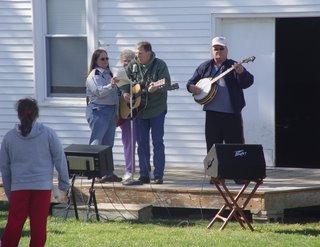
The theme of this week's Sunday Scribblings, though, is "Good," so I'm going to have to back up.
Nine years ago at exactly this time of the year, I was in Florence, Italy. I'd been there for two months already, and while I'd enjoyed most of my time living in that foreign city, that foreign country, I was ready to go home. Prior to arriving in Florence, I had anticipated having a much better time than I was actually having, so I'd booked my return ticket for a few weeks after the semester would end.
By October, though, as I said, I was ready to go home, so I took the bus out to the Florence airport, to reschedule my return flight to the day after classes ended. It took some doing, as we say around here, but eventually I got the flight changed and boarded the bus to return back to Florence.
On the bus, I started chatting with a woman who was in town from Rome visiting some friends. My Italian wasn't great, but it was good enough to let her know what I was doing in Florence and at the airport, and to ask her about what she was doing in town. When she asked what I was studying, I told her architecture, and the cultural history of the Renaissance, but that in the States I was a literature major who wanted to be a writer. She had graduated from a university in Rome as a literature major a few years prior to our meeting, so for the rest of the way back we tried to talk about books.
When we arrived at the bus stop near the train station, I helped her with her bags, and once we were on solid ground, she said that it was nice talking to me and gave me one of those kisses that grazed both of my cheeks. This was the second time I'd been kissed in such a way by an Italian woman those few months in Florence, and even though it was basically a part of the way they went about things, the equivalent, really, of a handshake, my heart fluttered.
"You speak Italian well," she said. "Not beautifully, but well."
I tried not to look too heartbroken. "Have a good visit," I said. "It was nice talking to you."
She was right, of course. I spoke Italian well, but not beautifully, and I never would.
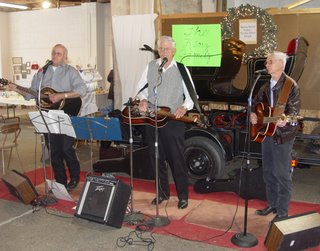
Which brings me back to those singers. The Scenic Drive stops are filled mostly with food stands and flea market-type items for sale. So we drive around the autumn countryside and look at the leaves and then stop to eat a corndog and peruse stuff that we have no need to purchase.
It is cold, and windy, and after a few hours of going about it, our cheeks are red and our noses drip, but we keep going at it, because we're troopers, and there's always another stop a few miles ahead.
And at that next stop, where we will emerge from the car, our hands in our coat pockets, there will be music. The singers, however hard they try, they will not sing beautifully, but they will sing well. And as we buy a walleye sandwich, or an apple dumpling, and we visit Illinois' smallest library and talk to the librarian there, and we peruse knick-knacks and handmade belts, and we feel the wind against our cheeks, we will be grateful for those singers, because they are out there in the cold for the mere pleasure of singing, despite their inability to make it beautiful.
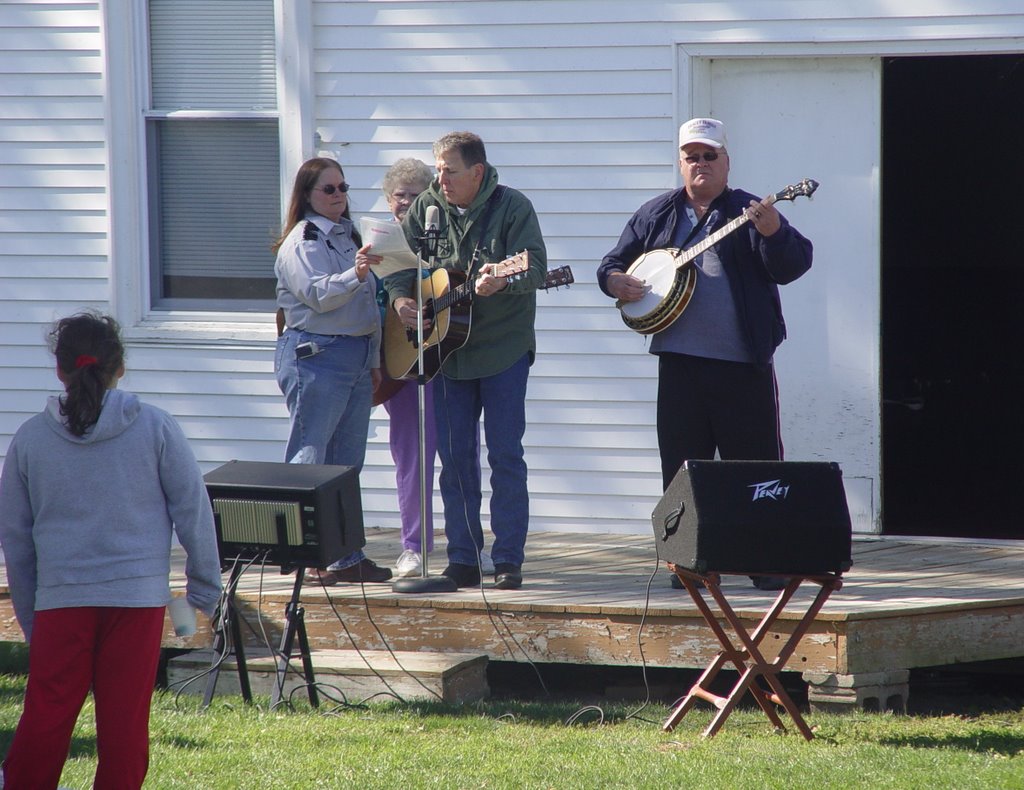
The theme of this week's Sunday Scribblings, though, is "Good," so I'm going to have to back up.
Nine years ago at exactly this time of the year, I was in Florence, Italy. I'd been there for two months already, and while I'd enjoyed most of my time living in that foreign city, that foreign country, I was ready to go home. Prior to arriving in Florence, I had anticipated having a much better time than I was actually having, so I'd booked my return ticket for a few weeks after the semester would end.
By October, though, as I said, I was ready to go home, so I took the bus out to the Florence airport, to reschedule my return flight to the day after classes ended. It took some doing, as we say around here, but eventually I got the flight changed and boarded the bus to return back to Florence.
On the bus, I started chatting with a woman who was in town from Rome visiting some friends. My Italian wasn't great, but it was good enough to let her know what I was doing in Florence and at the airport, and to ask her about what she was doing in town. When she asked what I was studying, I told her architecture, and the cultural history of the Renaissance, but that in the States I was a literature major who wanted to be a writer. She had graduated from a university in Rome as a literature major a few years prior to our meeting, so for the rest of the way back we tried to talk about books.
When we arrived at the bus stop near the train station, I helped her with her bags, and once we were on solid ground, she said that it was nice talking to me and gave me one of those kisses that grazed both of my cheeks. This was the second time I'd been kissed in such a way by an Italian woman those few months in Florence, and even though it was basically a part of the way they went about things, the equivalent, really, of a handshake, my heart fluttered.
"You speak Italian well," she said. "Not beautifully, but well."
I tried not to look too heartbroken. "Have a good visit," I said. "It was nice talking to you."
She was right, of course. I spoke Italian well, but not beautifully, and I never would.
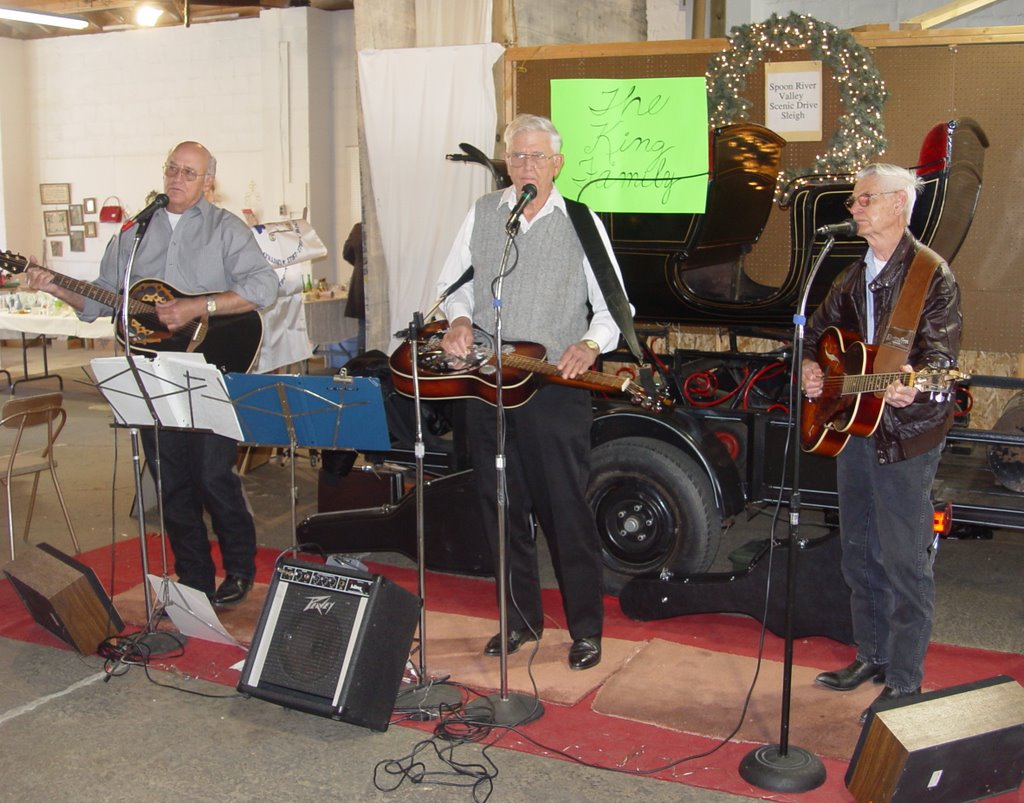
Which brings me back to those singers. The Scenic Drive stops are filled mostly with food stands and flea market-type items for sale. So we drive around the autumn countryside and look at the leaves and then stop to eat a corndog and peruse stuff that we have no need to purchase.
It is cold, and windy, and after a few hours of going about it, our cheeks are red and our noses drip, but we keep going at it, because we're troopers, and there's always another stop a few miles ahead.
And at that next stop, where we will emerge from the car, our hands in our coat pockets, there will be music. The singers, however hard they try, they will not sing beautifully, but they will sing well. And as we buy a walleye sandwich, or an apple dumpling, and we visit Illinois' smallest library and talk to the librarian there, and we peruse knick-knacks and handmade belts, and we feel the wind against our cheeks, we will be grateful for those singers, because they are out there in the cold for the mere pleasure of singing, despite their inability to make it beautiful.
10.20.2006
Big-Ass Book Order
I got paid at the beginning of this month for the first time since the end of May. In order to celebrate said paycheck--and in order to celebrate the fact that I recently learned I'm not going to be entering the job market but will instead keep doing what I've been doing where I've been doing it, which thrills me--I put in a big ol' book order tonight:
Third Class Superhero, Charles Yu--I read the title story in Mid-American Review, I think it was, and can't wait to read the collection.
Green Squall, Jay Hopler--I saw him read this afternoon at the college. He mentioned during the reading that he knew his book, when it was published, would be compared to Wallace Stevens, which to me is a good thing. Only he's funnier. And droller, if that's possible.
No Country for Old Men, Cormac McCarthy--It's been a while since I read any McCarthy, and to prepare myself for his new one, which I keep hearing good things about, I'm going to read his next-to-new one, which I also heard pretty good things about.
Dear Mr. President, Gabe Hudson*
Permanent Visitors, Kevin Moffett--I've run across Moffett in Tin House and McSweeney's. Now, I'm going to run across a bunch of his stories all under one cover.
Nothing in the World, Roy Kesey--This guy publishes stories everywhere, and pretty much all of them are kick-ass. Plus, this is a novella, and I'm a big fan of novellas. Say it with me: No-vel-la. Pretty cool, no? It's like a novel, only shorter.
Jarhead, Anthony Swofford*
My Girlfriend Comes to the City and Beats Me Up, Stephen Elliott--I love everything Stephen Elliott writes, even, and especially, his Poker Reports.
The Littlest Hitler - Stories, Ryan Boudinot--For a while, Boudinot's rockin' stories, like Roy Kesey's, were popping up everywhere. Now, Counterpoint, which, I believe, published Mary Robison's Tell Me, is releasing his collection.
Siste Viator, Sarah Manguso--I've only read a few things by Manguso, and they reminded me of Anne Carson, one of my favorite writers. I figured I'd check this out until McSweeney's releases her prose poetry/flash fiction collection sometime in the near future.
*I already own each of these in hardcover, but the books recently made the cut for the Intro to Lit class I'm going to teach Winter term, so I figured I better order the same editions my students are going to have, so that we can, you know, ahem, be on the same page.
Third Class Superhero, Charles Yu--I read the title story in Mid-American Review, I think it was, and can't wait to read the collection.
Green Squall, Jay Hopler--I saw him read this afternoon at the college. He mentioned during the reading that he knew his book, when it was published, would be compared to Wallace Stevens, which to me is a good thing. Only he's funnier. And droller, if that's possible.
No Country for Old Men, Cormac McCarthy--It's been a while since I read any McCarthy, and to prepare myself for his new one, which I keep hearing good things about, I'm going to read his next-to-new one, which I also heard pretty good things about.
Dear Mr. President, Gabe Hudson*
Permanent Visitors, Kevin Moffett--I've run across Moffett in Tin House and McSweeney's. Now, I'm going to run across a bunch of his stories all under one cover.
Nothing in the World, Roy Kesey--This guy publishes stories everywhere, and pretty much all of them are kick-ass. Plus, this is a novella, and I'm a big fan of novellas. Say it with me: No-vel-la. Pretty cool, no? It's like a novel, only shorter.
Jarhead, Anthony Swofford*
My Girlfriend Comes to the City and Beats Me Up, Stephen Elliott--I love everything Stephen Elliott writes, even, and especially, his Poker Reports.
The Littlest Hitler - Stories, Ryan Boudinot--For a while, Boudinot's rockin' stories, like Roy Kesey's, were popping up everywhere. Now, Counterpoint, which, I believe, published Mary Robison's Tell Me, is releasing his collection.
Siste Viator, Sarah Manguso--I've only read a few things by Manguso, and they reminded me of Anne Carson, one of my favorite writers. I figured I'd check this out until McSweeney's releases her prose poetry/flash fiction collection sometime in the near future.
*I already own each of these in hardcover, but the books recently made the cut for the Intro to Lit class I'm going to teach Winter term, so I figured I better order the same editions my students are going to have, so that we can, you know, ahem, be on the same page.
Enthusiasm
Since I've been spending a little too much time on this blog talking about TV, I thought I'd let you know about a few stories I've read recently.
I was stumbling around the Bellevue Literary Review website the other day and came across an amazing little story by Elizabeth Downs. It's called "In Lieu of a Better Plan," and you can download a PDF version of the story here. It's definitely worth your time--a compelling situation, a great voice, and an extraordinary use of tropes.
This one isn't available online, but in the Winter/Spring 2006 issue of Crab Orchard Review: "Current" by Kevin A. Gonzalez. "Current" won the Charles Johnson Student Fiction Award last year, and yes, if you hop over to the website, you'll see, beneath the photo of Mr. Gonzalez, the name of some writer-guy named Chad who was a finalist for the contest, but, alas, didn't win. When I read "Current," I was hoping, of course, to be able to tear it apart, to decry my loss of the thousand bucks, etc., but the story's pretty remarkable, and I must say, though I'm not much for "competing" stories, Mr. Johnson picked the right winner.
And, finally, if you still haven't read Dan Chaon's "Shepherdess" in the current issue of Virginia Quarterly Review, go and do so. It has one of the most unique break-up scenes I've ever read; plus, one of the most unique closing images. You'll never hear a car alarm twitter in the same way again.
I was stumbling around the Bellevue Literary Review website the other day and came across an amazing little story by Elizabeth Downs. It's called "In Lieu of a Better Plan," and you can download a PDF version of the story here. It's definitely worth your time--a compelling situation, a great voice, and an extraordinary use of tropes.
This one isn't available online, but in the Winter/Spring 2006 issue of Crab Orchard Review: "Current" by Kevin A. Gonzalez. "Current" won the Charles Johnson Student Fiction Award last year, and yes, if you hop over to the website, you'll see, beneath the photo of Mr. Gonzalez, the name of some writer-guy named Chad who was a finalist for the contest, but, alas, didn't win. When I read "Current," I was hoping, of course, to be able to tear it apart, to decry my loss of the thousand bucks, etc., but the story's pretty remarkable, and I must say, though I'm not much for "competing" stories, Mr. Johnson picked the right winner.
And, finally, if you still haven't read Dan Chaon's "Shepherdess" in the current issue of Virginia Quarterly Review, go and do so. It has one of the most unique break-up scenes I've ever read; plus, one of the most unique closing images. You'll never hear a car alarm twitter in the same way again.
10.19.2006
No Egregious Obfuscation
I've always hated the word "resolution."
And yet, I really like the word "resolve."
Right now, I'm resolving to do a few things.
* * *
Meanwhile: Outside, the October birds are raucous.
* * *
On the title of the post: Back when we were twenty-two or so, J.C. and I started inventing a line of pretentious bumper stickers. "No Egregious Obfuscation" was J.C.'s mom's contribution, and easily my favorite.
And yet, I really like the word "resolve."
Right now, I'm resolving to do a few things.
* * *
Meanwhile: Outside, the October birds are raucous.
* * *
On the title of the post: Back when we were twenty-two or so, J.C. and I started inventing a line of pretentious bumper stickers. "No Egregious Obfuscation" was J.C.'s mom's contribution, and easily my favorite.
10.18.2006
Clichés
For some reason the expression, "We work hard, and we play hard," popped into my head last night.
I was getting ready to watch Veronica Mars, which is easily one of my favorite shows on TV, right behind The Wire and The Sopranos. It's got a much different feel to it than those shows, but nonetheless, it's smart and entertaining, all that.
So I was getting ready to watch Veronica Mars and I was imagining some guy saying "We work hard, and we play hard." In my head, the guy who was saying it was holding a beer in his hand, and he was good-looking in that annoying way, way too cocky. His hair was gelled, and I could tell from the way he was holding his beer that he was capable of bad things--but that he'd probably find a way of getting away with whatever crimes he committed, because in my head, that's the kind of guy he was, the kind who got away with a lot of bad shit.
And I realized, while imagining this stuff, and getting ready to watch Veronica Mars, that I don't think I've ever been friends with that guy, with the one who holds a beer in his hand and says, "We work hard, and we play hard." I was kind of glad about that.
* * *
Speaking of Veronica Mars: I thought last night was going to be the night Veronica and Logan break up for this season, and I predicted this to J.C., as the whole episode seemed to be pointing in that direction, but then, then, then, as the episode was concluding, Veronica and Logan made up. And what song was playing in the background, you ask, as Veronica and Logan were standing next to the information desk at the library?
It was that song by Regina Spektor I you-tube'd to the blog last week. It about brought a tear to my eye.
I was getting ready to watch Veronica Mars, which is easily one of my favorite shows on TV, right behind The Wire and The Sopranos. It's got a much different feel to it than those shows, but nonetheless, it's smart and entertaining, all that.
So I was getting ready to watch Veronica Mars and I was imagining some guy saying "We work hard, and we play hard." In my head, the guy who was saying it was holding a beer in his hand, and he was good-looking in that annoying way, way too cocky. His hair was gelled, and I could tell from the way he was holding his beer that he was capable of bad things--but that he'd probably find a way of getting away with whatever crimes he committed, because in my head, that's the kind of guy he was, the kind who got away with a lot of bad shit.
And I realized, while imagining this stuff, and getting ready to watch Veronica Mars, that I don't think I've ever been friends with that guy, with the one who holds a beer in his hand and says, "We work hard, and we play hard." I was kind of glad about that.
* * *
Speaking of Veronica Mars: I thought last night was going to be the night Veronica and Logan break up for this season, and I predicted this to J.C., as the whole episode seemed to be pointing in that direction, but then, then, then, as the episode was concluding, Veronica and Logan made up. And what song was playing in the background, you ask, as Veronica and Logan were standing next to the information desk at the library?
It was that song by Regina Spektor I you-tube'd to the blog last week. It about brought a tear to my eye.
Late-Night Pop Culture Ramblings
I had today off due to Institute Day here at the college, and so instead of sitting in Workshop tonight, I was watching 30 Rock. I've had a major crush on Tina Fey for a long time, so I was happy to get my one shot till mid-November of catching the show, which, though it's not The Office, did make me laugh out loud three or four times.
Prior to seeing the show, I'd read some magazine pieces that compared 30 Rock to Studio 60 because both shows are focused around an SNL-like variety show, even if one is a thirty-minute sit-com and the other is a sixty-minute drama. I caught about half an episode of Studio 60 a week or so ago, and, after watching 30 Rock, I can see a few similarities. (Each of the shows I saw, for instance, featured bits about the efficacy of test audiences).
Anyway. The thing I was thinking about tonight while watching 30 Rock, besides my crush on Tina Fey, was how both 30 Rock and Studio 60 are some sort of fictionalized reality television. I know, similar shows have been around in the past (Sports Night, for example), but I think there's something to the fact that two new shows on the same network feature this kind of format.
Let me backtrack: There was one moment last summer when I sat down to watch television at around seven o'clock, and at the time, we only had an antenna, so we could kind of watch NBC, CBS, ABC, and Fox. That night, I flipped through our four channels and every station featured a reality show of some sort. I'll admit to liking a few reality shows, but at the time, I was pretty blown away by the fact that this was the state of television: all reality shows. And I kind of asked myself, "Where does it go from here? We can't have reality shows forever, can we?"
I think that 30 Rock and Studio 60 are pretty much answering that first question for me.
To bring this (kind of) around to books: There is obviously a trend in publishing right now that favors non-fiction over fiction. This was brought up at a departmental meeting recently, and one of my colleagues mentioned that she thought this trend, ten or so years from now, would change, and that fiction would once again become favored. I was glad to hear her say such a thing, but after thinking about these new television shows, I wonder if publishers aren't going to seek out some sort of hybrid form of fiction and non-fiction to offer the public. I suppose one could say that James Frey and maybe even Augusten Burroughs and David Sedaris have been doing just that for the past few years. I don't think it's quite the same thing, though. There is this new book that comes out in a few weeks, though, by Dave Eggers that seems, based on what I've heard about it, to be blending the two forms in just the kind of way I'm talking about.
Prior to seeing the show, I'd read some magazine pieces that compared 30 Rock to Studio 60 because both shows are focused around an SNL-like variety show, even if one is a thirty-minute sit-com and the other is a sixty-minute drama. I caught about half an episode of Studio 60 a week or so ago, and, after watching 30 Rock, I can see a few similarities. (Each of the shows I saw, for instance, featured bits about the efficacy of test audiences).
Anyway. The thing I was thinking about tonight while watching 30 Rock, besides my crush on Tina Fey, was how both 30 Rock and Studio 60 are some sort of fictionalized reality television. I know, similar shows have been around in the past (Sports Night, for example), but I think there's something to the fact that two new shows on the same network feature this kind of format.
Let me backtrack: There was one moment last summer when I sat down to watch television at around seven o'clock, and at the time, we only had an antenna, so we could kind of watch NBC, CBS, ABC, and Fox. That night, I flipped through our four channels and every station featured a reality show of some sort. I'll admit to liking a few reality shows, but at the time, I was pretty blown away by the fact that this was the state of television: all reality shows. And I kind of asked myself, "Where does it go from here? We can't have reality shows forever, can we?"
I think that 30 Rock and Studio 60 are pretty much answering that first question for me.
To bring this (kind of) around to books: There is obviously a trend in publishing right now that favors non-fiction over fiction. This was brought up at a departmental meeting recently, and one of my colleagues mentioned that she thought this trend, ten or so years from now, would change, and that fiction would once again become favored. I was glad to hear her say such a thing, but after thinking about these new television shows, I wonder if publishers aren't going to seek out some sort of hybrid form of fiction and non-fiction to offer the public. I suppose one could say that James Frey and maybe even Augusten Burroughs and David Sedaris have been doing just that for the past few years. I don't think it's quite the same thing, though. There is this new book that comes out in a few weeks, though, by Dave Eggers that seems, based on what I've heard about it, to be blending the two forms in just the kind of way I'm talking about.
10.13.2006
Where I Live
Galesburg has a page on Wikipedia. Check out the second bullet under the Trivia sub-heading.
* * *
Courtesy of Galesburg's Register Mail: You can view a video of the Scarecrow Festival here. It's worth watching, if only to look at the scarecrows while listening to some woman sing "I'm Here for the Party."
* * *
This didn't happen in Galesburg but in Mineral, Illinois: Frog Found in Can of Peas.
* * *
And so this place where I live, which I pretty much love despite its lack of a decent bookstore or sushi restaurant, doesn't appear to be the land of only country music and teenage debauchery: Jordan Davis' The Million Poems Show is coming to campus this afternoon and will get me out of my last late Friday afternoon office hour. I can't wait.
* * *
Update: The Wikipedia page has been changed. The second bullet I was trying to point people to had said something like, "Because there is little to do, teenagers often turn to drinking and having sex, sometimes when they are as young as thirteen."
Despite the shaky information, and the uncertainty that what is here today might not be around tomorrow, you gotta love Wikipedia.
Isn't uncertainty one of the basic tenets of postmodernism?
* * *
Courtesy of Galesburg's Register Mail: You can view a video of the Scarecrow Festival here. It's worth watching, if only to look at the scarecrows while listening to some woman sing "I'm Here for the Party."
* * *
This didn't happen in Galesburg but in Mineral, Illinois: Frog Found in Can of Peas.
* * *
And so this place where I live, which I pretty much love despite its lack of a decent bookstore or sushi restaurant, doesn't appear to be the land of only country music and teenage debauchery: Jordan Davis' The Million Poems Show is coming to campus this afternoon and will get me out of my last late Friday afternoon office hour. I can't wait.
* * *
Update: The Wikipedia page has been changed. The second bullet I was trying to point people to had said something like, "Because there is little to do, teenagers often turn to drinking and having sex, sometimes when they are as young as thirteen."
Despite the shaky information, and the uncertainty that what is here today might not be around tomorrow, you gotta love Wikipedia.
Isn't uncertainty one of the basic tenets of postmodernism?
10.11.2006
Regina
I saw this first over at Alison Stine's blog, and, man, I was so totally digging it.
What can I say, I'm a sucker for strings.
By the way, I've still been listening to Iron & Wine and Calexico's "He Lays in the Reins," and I'm looking for new music recommendations, so if you have some, please, send them my way. And Fringes, John Denver is fine and all, but I'm looking for something new.
I saw this first over at Alison Stine's blog, and, man, I was so totally digging it.
What can I say, I'm a sucker for strings.
By the way, I've still been listening to Iron & Wine and Calexico's "He Lays in the Reins," and I'm looking for new music recommendations, so if you have some, please, send them my way. And Fringes, John Denver is fine and all, but I'm looking for something new.
Writing Exercise
A few weeks ago, when we were talking about characterization in Beginning Fiction Writing, I had my students do an exercise. The gist of the thing goes like this: I put ten or eleven objects on the table--a little chick salt shaker, a Camel buck, a flashlight, a notebook, a binder clip, etc.--and then had the students think of a character who owned all of the objects. After they'd conjured up a person, they had to write down what each object was and list a specific use the character has for the object. Once they were finished with that part of the task, I handed them a sheet of paper with questions like: What does the person look like? Does s/he have any siblings? What is this person most afraid of? What was their first kiss like? What is a secret this person has never told anyone else? To whom might the person tell this secret? etc. The idea behind the exercise is that most of the info. the students imagine will never find its way into an actual story, but the more they know about their characters' lives--both the objects in them and the characters' pasts--the more three-dimensional those characters will end up on the page.
The truth is, I don't like having my students do too many exercises in class. It sometimes feels like a waste of time. But I tend to work three or four exercises into the syllabus each ten-week term, and we almost always end up doing this one.
Anyway. The reason I bring it up: This morning I read a pretty fantastic student story. Really. It was good. Once I'd finished reading it and written some notes to its author, I turned to the last page, the author's note. In the author's note, the student had written that she started writing about the narrator when we did the above exercise in class, and that the story she ended up writing pretty much came directly out of the exercise.
How happy did this make me as a teacher? I don't think I need to tell you.
On a side note: I took all of the objects to school in a plastic grocery bag, which, once I brought it back home, I placed on the bureau where a lot of junk ends up going. I just yesterday took the time to throw away the bag and put away the objects, which, of course, had all come from somewhere in the house.
The truth is, I don't like having my students do too many exercises in class. It sometimes feels like a waste of time. But I tend to work three or four exercises into the syllabus each ten-week term, and we almost always end up doing this one.
Anyway. The reason I bring it up: This morning I read a pretty fantastic student story. Really. It was good. Once I'd finished reading it and written some notes to its author, I turned to the last page, the author's note. In the author's note, the student had written that she started writing about the narrator when we did the above exercise in class, and that the story she ended up writing pretty much came directly out of the exercise.
How happy did this make me as a teacher? I don't think I need to tell you.
On a side note: I took all of the objects to school in a plastic grocery bag, which, once I brought it back home, I placed on the bureau where a lot of junk ends up going. I just yesterday took the time to throw away the bag and put away the objects, which, of course, had all come from somewhere in the house.
10.10.2006
ISO Food Poems
My friend Lisa--and by friend I mean someone I've hung out with in real life--runs a very cool food blog over at Champaign Taste. She recently remembered reading one of my Poetry Thursday posts about food poetry and decided to put out a call for people's favorite food poems. So, if you have a favorite food poem, post it on your blog, and then head over her way to let her know that you've put something up. While you're over there, be sure to read her spirited and touching poem, "Alla Mia Madre."
And speaking of food and literature, if you're into both, why don't you go check out Alimentum Journal: The Literature of Food. From what I hear, they've been putting together a pretty rockin' little magazine.
And speaking of food and literature, if you're into both, why don't you go check out Alimentum Journal: The Literature of Food. From what I hear, they've been putting together a pretty rockin' little magazine.
10.09.2006
Nightmare
Last night I dreamt about the story that I recently finished and submitted to a few magazines.
I didn't dream about the contents of the story, which would have been cool; instead, I dreamt that I was back in grad school, and the story was being workshopped. Only in the dream, instead of sitting in a circle around a few pushed-together tables, we were all sitting in rows in those grade school desks with the flip-up tops. And the teacher was writing on a chalkboard at the front of the room, which almost never happened during workshop. And the teacher, as s/he (it was a dream, and I can't remember if the teacher was a man or a woman) as s/he was writing things about my story on the board, s/he was singing in this lilting voice about all the things I'd done wrong.
I was at the back of the room, and while the teacher continued singing and writing things on the board, everyone else in class turned around in their too small desks and held up my story, saying, "But nothing happens. I kept waiting for something to happen and it never did."
At least they weren't singing.
I didn't dream about the contents of the story, which would have been cool; instead, I dreamt that I was back in grad school, and the story was being workshopped. Only in the dream, instead of sitting in a circle around a few pushed-together tables, we were all sitting in rows in those grade school desks with the flip-up tops. And the teacher was writing on a chalkboard at the front of the room, which almost never happened during workshop. And the teacher, as s/he (it was a dream, and I can't remember if the teacher was a man or a woman) as s/he was writing things about my story on the board, s/he was singing in this lilting voice about all the things I'd done wrong.
I was at the back of the room, and while the teacher continued singing and writing things on the board, everyone else in class turned around in their too small desks and held up my story, saying, "But nothing happens. I kept waiting for something to happen and it never did."
At least they weren't singing.
10.08.2006
Ordinary Strange
Earlier this week I was thinking about the stories I write, trying to come up with something like an artist's statement that characterizes my writerly preoccupations. I didn't spend too much time thinking about it, but the phrase I came up with to describe what I am drawn to write about was "ordinary strange," which I suppose could also be translated as extraordinary ordinary, or somesuch.
And then this morning I was working on a piece of flash that involved how J.C. and I have to open our back door. The knob is forever loosening, so we have to gentle it in this certain way in order to keep from pulling the knob out of the door...
And then just a few minutes ago I was closing the garage door, which has been malfunctioning ever since I bumped one of the "eyes" with the hot-water heater I was discarding last week. Basically, the door stops closing about a foot too soon, then I have to restart the thing as if I'm opening it, stop it again, and hold down on the button to try to get it to close all the way...
And it kind of occurred to me that these small things--the way we have to open our back door or the way I have to close the garage door--are examples, metaphorically, of the ordinary strange, or the extraordinary ordinary, whichever you prefer. I mean, I don't think about the door handle or how I have to go about closing the garage door on a daily basis, because these little rituals have become a part of my daily habits. But if someone were to view them from the outside, they might think these things are a little odd. And poor D., he's always pulling off the door handle and looking at me like he's just broken it, with this look of terrible guilt on his face.
So this is a call to my four or five readers out there: What about your daily routine is extraordinarily ordinary? I'm looking for things that could at some point find their way into a story, so if you're willing to share, the stranger, the better.
* * *
And speaking of ordinary strange: I just attended a wedding reception at my old Latin and Greek professor's house, and when I arrived he served me what I thought was champagne with raspberries. The stuff had an odd taste to it though, that I was guessing wasn't coming from only the fruit. It was good--excellent, even, but I couldn't put my tongue on what I was tasting.
Eventually, I made my way over to the drinks table and discovered that he'd been adding some kind of currant schnapps to the champagne, in addition to the raspberries. I know it probably sounds odd, but the currants and the champagne...it's definitely worth a try. It's sweet, but not jaw-achingly so.
* * *
One more thing: I was working on that piece of flash on a large index card, on which I wrote not only the notes for the story but also my shopping lists for this morning's trips to Target and Aldi. I set down the list at Target while I was using my debit card, and I thought to myself, "Don't leave that list there. If somebody reads those notes they'll most likely think you're crazy." And then the woman handed me the receipt, and I picked up my bags, and thanked her, and I left the index card on the counter.
I'm sure it's in the trash by now, but here's a snippet of what the woman read on the card before she threw it away:
She wants to get out the door in a way that is stylish but not overly dramatic. [Metaphor.] A gesture: Purse?...A pair of shoes?
And then this morning I was working on a piece of flash that involved how J.C. and I have to open our back door. The knob is forever loosening, so we have to gentle it in this certain way in order to keep from pulling the knob out of the door...
And then just a few minutes ago I was closing the garage door, which has been malfunctioning ever since I bumped one of the "eyes" with the hot-water heater I was discarding last week. Basically, the door stops closing about a foot too soon, then I have to restart the thing as if I'm opening it, stop it again, and hold down on the button to try to get it to close all the way...
And it kind of occurred to me that these small things--the way we have to open our back door or the way I have to close the garage door--are examples, metaphorically, of the ordinary strange, or the extraordinary ordinary, whichever you prefer. I mean, I don't think about the door handle or how I have to go about closing the garage door on a daily basis, because these little rituals have become a part of my daily habits. But if someone were to view them from the outside, they might think these things are a little odd. And poor D., he's always pulling off the door handle and looking at me like he's just broken it, with this look of terrible guilt on his face.
So this is a call to my four or five readers out there: What about your daily routine is extraordinarily ordinary? I'm looking for things that could at some point find their way into a story, so if you're willing to share, the stranger, the better.
* * *
And speaking of ordinary strange: I just attended a wedding reception at my old Latin and Greek professor's house, and when I arrived he served me what I thought was champagne with raspberries. The stuff had an odd taste to it though, that I was guessing wasn't coming from only the fruit. It was good--excellent, even, but I couldn't put my tongue on what I was tasting.
Eventually, I made my way over to the drinks table and discovered that he'd been adding some kind of currant schnapps to the champagne, in addition to the raspberries. I know it probably sounds odd, but the currants and the champagne...it's definitely worth a try. It's sweet, but not jaw-achingly so.
* * *
One more thing: I was working on that piece of flash on a large index card, on which I wrote not only the notes for the story but also my shopping lists for this morning's trips to Target and Aldi. I set down the list at Target while I was using my debit card, and I thought to myself, "Don't leave that list there. If somebody reads those notes they'll most likely think you're crazy." And then the woman handed me the receipt, and I picked up my bags, and thanked her, and I left the index card on the counter.
I'm sure it's in the trash by now, but here's a snippet of what the woman read on the card before she threw it away:
She wants to get out the door in a way that is stylish but not overly dramatic. [Metaphor.] A gesture: Purse?...A pair of shoes?
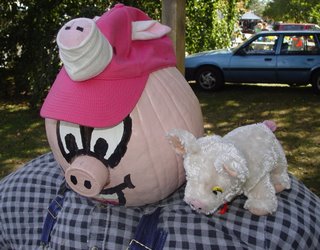
Galesburg Scarecrow Festival
Awards will be given later today in the following categories:
Traditional

(The poster attached to the scarecrow's legs reads "Let God's Light Shine!")
Whimsical
Knox County Business
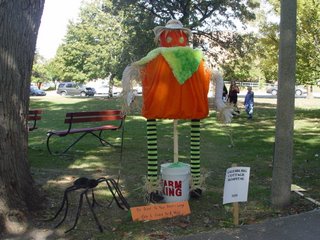
(That's the front of my truck in the pumpkin's right armpit.)
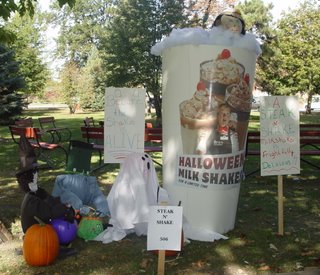
Youth Clubs/Organizations
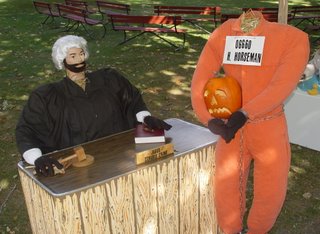
And a few other categories, including Children's, which had some pretty cute entries, but I didn't get a chance to take any pics, as the foot traffic was fairly heavy, and I was trying to stay out of people's way.
I know this is a little random. I've been trying to think of something literary to say to make it more pertinent to this blog, but I'm not coming up with anything. Well, that is Judge Ichabod Crane in the last photo, which is, of course, fairly literary, though I've never cared much for Irving.
Anybody know of any good stories that incorporate scarecrows? There's the great pumpkin-carving story "Yours" by Mary Robison, which I taught just a week or so ago and which I love so much I would probably have the entire thing tattooed onto my back.
And there's Charles Baxter's story "Harmony of the World" which incorporates a scarecrow-like effigy of a woman hanging from a tree.
But I can't think of any good scarecrow stories, other than, you know, The Wizard of Oz. Any help, people?
Traditional
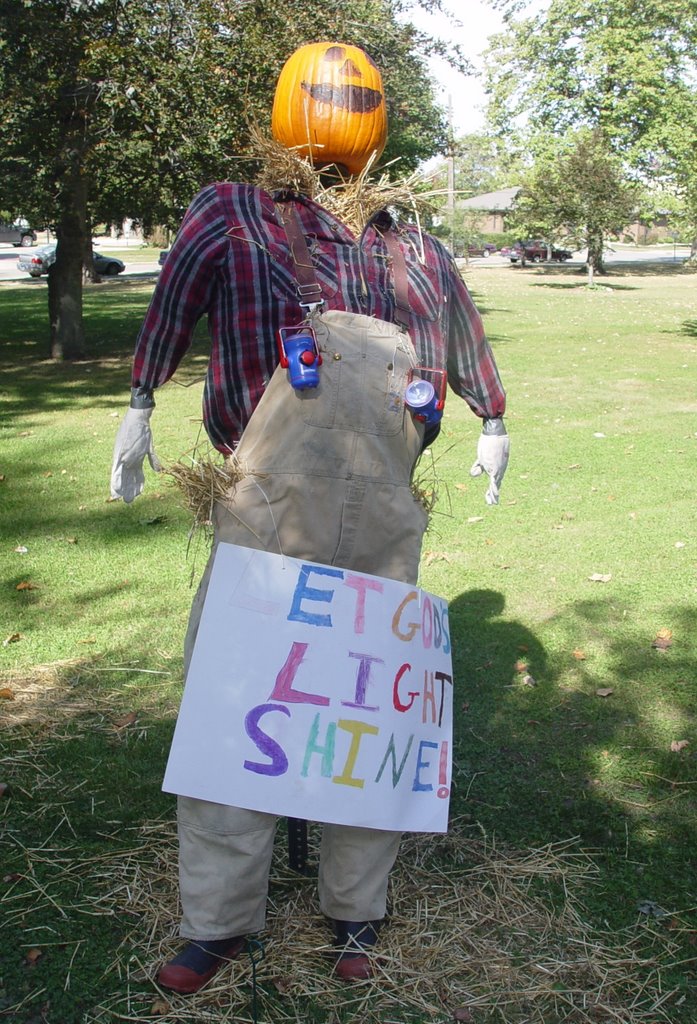
(The poster attached to the scarecrow's legs reads "Let God's Light Shine!")
Whimsical

Knox County Business
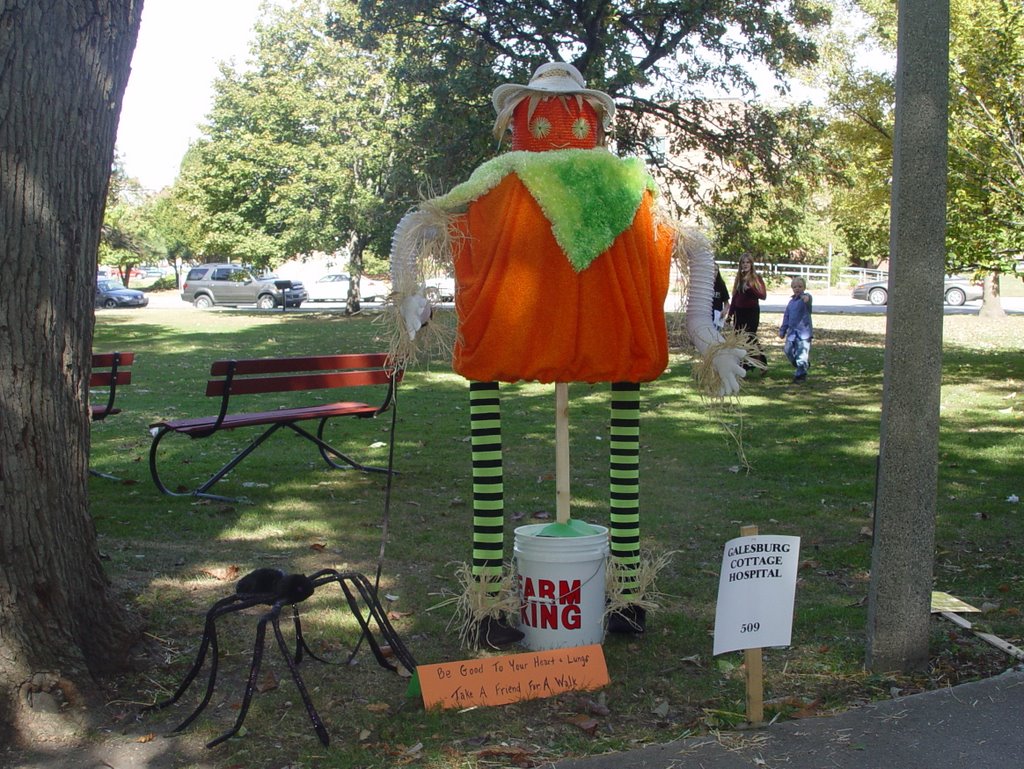
(That's the front of my truck in the pumpkin's right armpit.)

Youth Clubs/Organizations

And a few other categories, including Children's, which had some pretty cute entries, but I didn't get a chance to take any pics, as the foot traffic was fairly heavy, and I was trying to stay out of people's way.
I know this is a little random. I've been trying to think of something literary to say to make it more pertinent to this blog, but I'm not coming up with anything. Well, that is Judge Ichabod Crane in the last photo, which is, of course, fairly literary, though I've never cared much for Irving.
Anybody know of any good stories that incorporate scarecrows? There's the great pumpkin-carving story "Yours" by Mary Robison, which I taught just a week or so ago and which I love so much I would probably have the entire thing tattooed onto my back.
And there's Charles Baxter's story "Harmony of the World" which incorporates a scarecrow-like effigy of a woman hanging from a tree.
But I can't think of any good scarecrow stories, other than, you know, The Wizard of Oz. Any help, people?
10.07.2006
Serialized Fiction
I used to check in at Maud's place two or three times a day, wanting to know all about what was going on in the book world, but I've pretty much ignored her since I left grad school a year and a half ago. This morning, though, I took a nostalgic trip over her way, meandered a bit, and found something interesting: Velocity, Louisville's free weekly newspaper, is serializing a short story by Chris Offutt this month. Next month, they're going to publish new work by ZZ Packer (whose "Every Tongue Shall Confess" we explicated this past Wednesday in the fiction workshop).
And speaking of serialized fiction: Dan Wickett recently alerted the world to the fact that my old teacher Mike Magnuson is serializing new fiction over at onmilwaukee.com, an online daily out of, um, Milwaukee. You can read Part One of "The Falls" here.
I imagine serialized fiction works differently now--whether it's Slate's serialization of Walter Kirn's novel, The Unbinding, or some weekly's serialization of a short story--than it did in the Victorian era. I'm guessing, for example, the places publishing the things have seen the full products before they start putting them out into the world, whereas back in the day, Dickens and Conrad and crew, I think, often worked on a kind of deadline, sending off the next installment to the publisher as soon as it was completed.
I've always liked this kind of ethic--which I think is used more today by the writers and artists who produce comic books--even if it works in contrast to most commonly held beliefs about the amount of time and the number of revisions it takes to create "art." What I like about the "produce-and-publish" ethic is that, while it occasionally fails, often the deadline-pressures surrounding the writers help them to create something truly great, and they then get that great thing out into the world before they have a chance to doubt themselves or run the work past several editors.
Nonetheless, while I admire the ethic and its occasional byproducts, I don't think I would ever have the guts to work that way, though sometimes I do wish I could muster just those kind of guts.
And speaking of serialized fiction: Dan Wickett recently alerted the world to the fact that my old teacher Mike Magnuson is serializing new fiction over at onmilwaukee.com, an online daily out of, um, Milwaukee. You can read Part One of "The Falls" here.
I imagine serialized fiction works differently now--whether it's Slate's serialization of Walter Kirn's novel, The Unbinding, or some weekly's serialization of a short story--than it did in the Victorian era. I'm guessing, for example, the places publishing the things have seen the full products before they start putting them out into the world, whereas back in the day, Dickens and Conrad and crew, I think, often worked on a kind of deadline, sending off the next installment to the publisher as soon as it was completed.
I've always liked this kind of ethic--which I think is used more today by the writers and artists who produce comic books--even if it works in contrast to most commonly held beliefs about the amount of time and the number of revisions it takes to create "art." What I like about the "produce-and-publish" ethic is that, while it occasionally fails, often the deadline-pressures surrounding the writers help them to create something truly great, and they then get that great thing out into the world before they have a chance to doubt themselves or run the work past several editors.
Nonetheless, while I admire the ethic and its occasional byproducts, I don't think I would ever have the guts to work that way, though sometimes I do wish I could muster just those kind of guts.
10.06.2006
Karmic Retribution
This afternoon as I was eating lunch I saw one of the commercials for the MLB playoffs on ESPN. The commercial featured a woman who has locked herself in her room because the Red Sox didn't make the playoffs. Eventually, Tommy Lasorda is called on-scene, and he tells the woman through her closed door, "It's October. It's time to root against the Yankees."
And the woman comes out, happy to do just that.
I don't have many favorite teams--the Cubs are pretty much it--but I do have a lot of teams I like to root against: Duke basketball, the Lakers, Ohio State football, and, of course, the Yankees. The problem, though, is that I always feel like my (and others') hatred for teams like Duke, and the Lakers, and the Yankess, actually sends them some kind of positive karmic energy, and thus tends to work against itself. It's like every time one of us wishes Kobe Bryant would just fall on his face, we're actually sending that buzzer-beater right through the hoop, helping it touch nothing but net.
Right now, though, Detroit is up 2-1 on the Yanks in the playoffs, and I couldn't be happier, especially considering that ridiculous lineup the boys from the Bronx are fielding (seriously. have you seen this lineup? it's sick).
And so, at the risk of angering the karmic gods, I'm saying, go Detroit. May you meet up with San Diego (I know, I know, they're down 2-0) in the World Series.
And the woman comes out, happy to do just that.
I don't have many favorite teams--the Cubs are pretty much it--but I do have a lot of teams I like to root against: Duke basketball, the Lakers, Ohio State football, and, of course, the Yankees. The problem, though, is that I always feel like my (and others') hatred for teams like Duke, and the Lakers, and the Yankess, actually sends them some kind of positive karmic energy, and thus tends to work against itself. It's like every time one of us wishes Kobe Bryant would just fall on his face, we're actually sending that buzzer-beater right through the hoop, helping it touch nothing but net.
Right now, though, Detroit is up 2-1 on the Yanks in the playoffs, and I couldn't be happier, especially considering that ridiculous lineup the boys from the Bronx are fielding (seriously. have you seen this lineup? it's sick).
And so, at the risk of angering the karmic gods, I'm saying, go Detroit. May you meet up with San Diego (I know, I know, they're down 2-0) in the World Series.
10.05.2006
Poetry Thursday--Betrayed by Face
The prompt over at Poetry Thursday this week was to write about the body. In my head, I briefly shuffled through the content of my old poems, even though I was pretty certain I hadn’t written anything about my hands or my ears or my ass. So, the next thing that came to mind was this poem by Diane Wakoski, which J.C. used to recite occasionally back in college. When I was going through my Kerouac and Bukowski phases, J.C. was all about the Wakoski. And last night, as I was reading through some of Emerald Ice: Selected Poems 1962-1987, it became pretty clear why all over again: the woman rocks. What follows is only the first third or so of the poem, and I’m guessing blogger will mess up some of the formatting, though I’ll do my best to keep it from happening.
I Have Had to Learn to Live With My Face
You see me alone tonight.
My face has betrayed me again,
the garage mechanic who promises to fix my car
and never does.
My face
that my friends tell me is so full of character;
my face
I have hated for so many years;
my face
I have made an angry contract to live with
though no one could love it;
my face that I wish you would bruise and batter
and destroy, napalm it, throw acid on it,
so that I might have another
or be rid of it at last.
I drag peacock feather behind me
to erase the trail of the moon. Those tears
I shed for myself,
sometimes in anger.
There is no pretense in my life. The man who lives with me
must see something beautiful,
like a dark snake coming out of my mouth,
or love the tapestry of my actions, my life/this body, this
face, they have nothing to offer
but angry insistence, their presence.
I hate them,
want my life to be more.
Hate their shadow on even my words.
I sell my soul for good plumbing
and hot water,
I tell everyone;
and my face is soft,
opal,
a feathering of snow
against the
cold black leather coat
which is night.
You,
night,
my face against the chilly
expanse
of your back.
Learning to live with what you’re born with
is the process,
the involvement,
the making of a life.
And I have not learned happily
to live with my face,
that Diane which always looks better on film
than in life.
I sternly accept this plain face,
and hate every moment of that sternness.
I Have Had to Learn to Live With My Face
You see me alone tonight.
My face has betrayed me again,
the garage mechanic who promises to fix my car
and never does.
My face
that my friends tell me is so full of character;
my face
I have hated for so many years;
my face
I have made an angry contract to live with
though no one could love it;
my face that I wish you would bruise and batter
and destroy, napalm it, throw acid on it,
so that I might have another
or be rid of it at last.
I drag peacock feather behind me
to erase the trail of the moon. Those tears
I shed for myself,
sometimes in anger.
There is no pretense in my life. The man who lives with me
must see something beautiful,
like a dark snake coming out of my mouth,
or love the tapestry of my actions, my life/this body, this
face, they have nothing to offer
but angry insistence, their presence.
I hate them,
want my life to be more.
Hate their shadow on even my words.
I sell my soul for good plumbing
and hot water,
I tell everyone;
and my face is soft,
opal,
a feathering of snow
against the
cold black leather coat
which is night.
You,
night,
my face against the chilly
expanse
of your back.
Learning to live with what you’re born with
is the process,
the involvement,
the making of a life.
And I have not learned happily
to live with my face,
that Diane which always looks better on film
than in life.
I sternly accept this plain face,
and hate every moment of that sternness.
10.03.2006
Online Find
The guy who is probably my favorite living short story writer has a new story in the Fall 2006 issue of Virginia Quarterly Review.
The guy's name is Dan Chaon, and you can read his story "Shepherdess" here.
On a Dan Chaon-related sidenote, I'm actually teaching his story "Prosthesis" tomorrow afternoon, along with Maile Meloy's "Ranch Girl" and Peter Orner's "The Raft." It's point-of-view day in Beginning Fiction Writing, and my boss is going to be there, taking notes, so she can write a more thorough recommendation for me should I end up applying for teaching jobs elsewhere later this fall.
Am I nervous? you ask. Um, yeah. Pretty much. The last time I had someone in the classroom, I over-prepared and my students froze up, seemingly intimidated by the outsider's presence. I gave my class warning this time, though, and advertised it as an opportunity to show the chair of the department how smart they are. Now, I just have to concentrate on not over-preparing, which, admittedly, is an odd thing on which to have to concentrate, and somewhat defeats the purpose, I think.
We'll see if I can make it work.
The guy's name is Dan Chaon, and you can read his story "Shepherdess" here.
On a Dan Chaon-related sidenote, I'm actually teaching his story "Prosthesis" tomorrow afternoon, along with Maile Meloy's "Ranch Girl" and Peter Orner's "The Raft." It's point-of-view day in Beginning Fiction Writing, and my boss is going to be there, taking notes, so she can write a more thorough recommendation for me should I end up applying for teaching jobs elsewhere later this fall.
Am I nervous? you ask. Um, yeah. Pretty much. The last time I had someone in the classroom, I over-prepared and my students froze up, seemingly intimidated by the outsider's presence. I gave my class warning this time, though, and advertised it as an opportunity to show the chair of the department how smart they are. Now, I just have to concentrate on not over-preparing, which, admittedly, is an odd thing on which to have to concentrate, and somewhat defeats the purpose, I think.
We'll see if I can make it work.
Subscribe to:
Posts (Atom)
